Japan Strains to Staff Its Armed Forces As Defense Build-Up Accelerates
- Andrej Botka
- 2 дня назад
- 2 мин. чтения

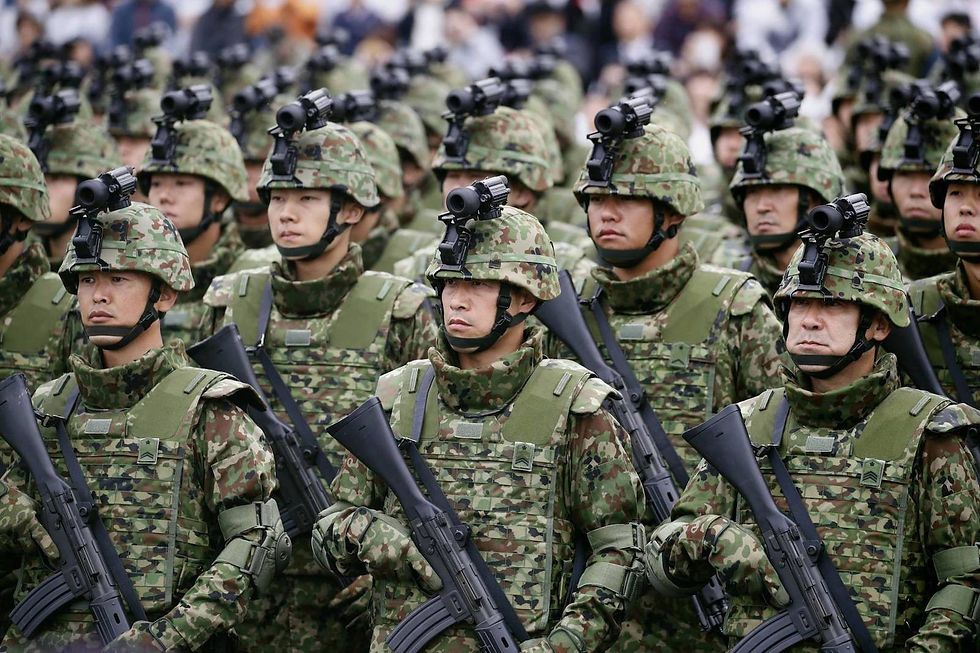
Tokyo — Japan’s drive to enlarge and modernize its military is running up against a stubborn shortage of recruits, government officials and military planners say, complicating plans to reshape the country’s defense posture amid rising regional tensions. The Self-Defense Forces have announced expansions and big procurement drives, but recruiting targets are lagging — leaving roughly one-third of newly planned positions vacant in some branches, according to defense ministry briefings and official estimates.
Demographic realities are a major part of the problem. A shrinking pool of young adults, an aging population and decades of low birthrates mean fewer candidates are available for enlistment. At the same time, private-sector employers are aggressively hiring, offering higher starting pay and clearer career ladders. Many young people are reluctant to choose the armed services over opportunities in tech and finance, or to sign up for careers that can involve long periods away from family.
The Defense Ministry has rolled out a package of measures to try to close the gap. They include bigger enlistment bonuses, higher wages for specialized specialties, expanded recruitment of women and older applicants, and new part-time and reserve options intended to attract civilians with critical skills. Outreach efforts now target urban centers and vocational schools rather than relying on traditional regional recruitment networks, and officials are experimenting with shorter initial contracts to entice hesitant candidates.
Even so, analysts warn those changes may not be enough to meet ambitious force-expansion goals quickly. A Tokyo-based security expert who has tracked personnel trends for years said the ministry is chasing structural labor-market forces and social attitudes that won't shift overnight. She noted that increasing pay helps, but without sustained changes in work-life balance, childcare access and public perceptions of military service, retention will remain a challenge.
The personnel shortfall carries practical consequences: training pipelines are under pressure, some units face delayed activation, and commanders are having to rely more on contractors and reserve components to fill capability gaps. Officials also say technology investments — from drones to automated systems — are being prioritized to compensate for manpower limits, while Tokyo leans more heavily on allied interoperability and joint training with partners such as the United States.
That trade-off has sparked a wider political debate about how far Japan should go to secure the necessary human resources. Some lawmakers and defense officials are openly discussing sweeping options, including expanded immigration for skilled workers and larger-scale reserve call-ups, while others insist the country can meet its needs through incentives and social-policy reforms. Whatever path Tokyo chooses, experts say, recruiting enough people for a larger, more active military will be a long-term task that reaches beyond the barracks and into schools, workplaces and family policy.


Комментарии